

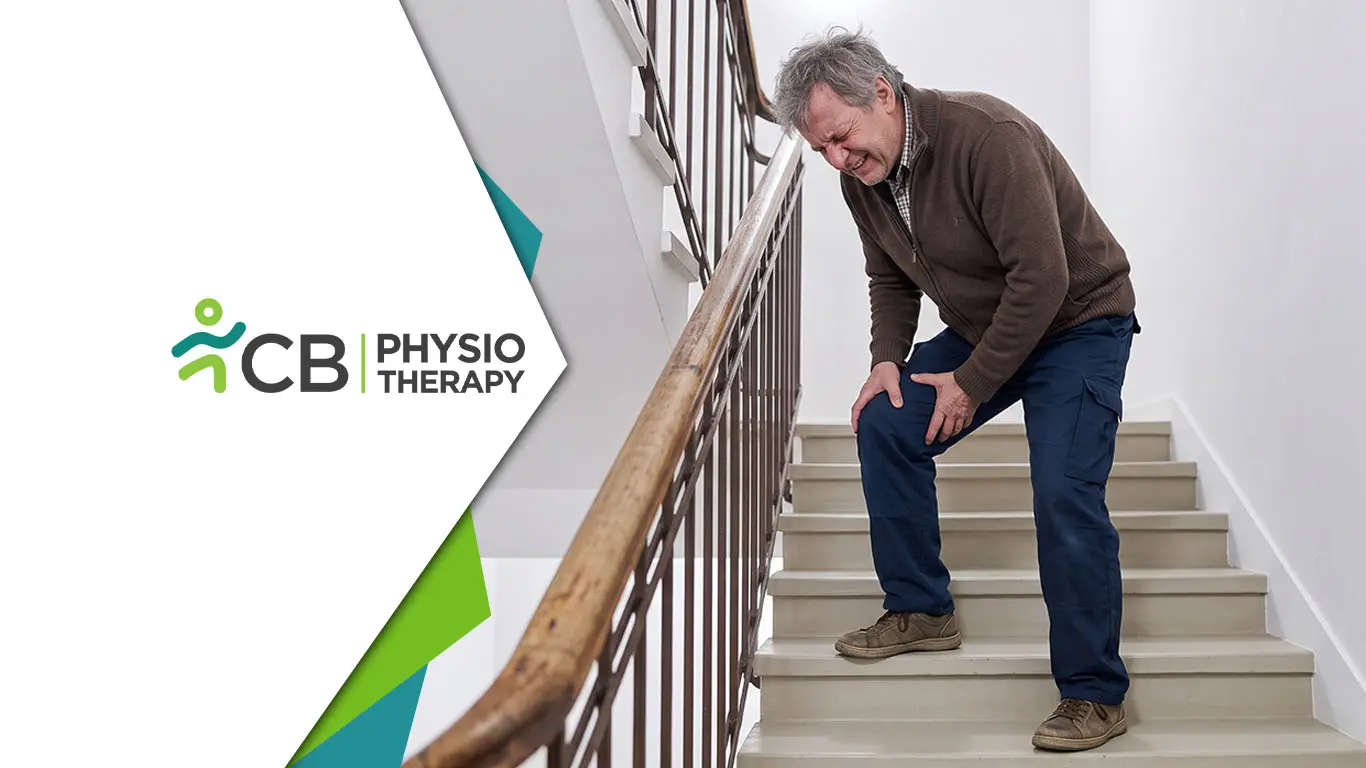
Climbing stairs is a normal part of everyday life, but for many people, it can bring an unwelcome problem: knee pain. You may feel pain while stepping up, notice discomfort when coming down, or experience stiffness and weakness around the knee joint.
Occasional knee discomfort does not always
indicate a serious problem. However, recurring or worsening pain can be a sign
that your knee is not moving or functioning properly. Understanding the
possible causes can help you take the right steps toward recovery.
Why Does Stair Climbing Cause Knee Pain?
Your knees work harder when climbing stairs
than when walking. The muscles around your thighs and hips must control your
body weight while the knee bends and straightens repeatedly.
If the muscles are weak, the knee joint is
irritated, or your movement pattern is inefficient, the additional load from
stairs may trigger pain.
Some common causes include:
1. Patellofemoral Pain Syndrome
Patellofemoral pain syndrome is a common cause
of pain around or behind the knee cap. It can occur when the kneecap does not
move smoothly over the thigh bone during knee movement.
People with this condition often experience
pain when climbing or descending stairs, squatting, running, or sitting for
long periods with the knees bent.
Osteoarthritis occurs when the protective
cartilage within a joint gradually wears down. It is more common with
increasing age, although previous injuries, excess joint stress, and other
factors can contribute.
Knee osteoarthritis may cause pain, stiffness,
swelling, reduced movement, and difficulty with activities such as climbing
stairs.
3. Weak Thigh and Hip Muscles
Your quadriceps, hamstrings, and hip muscles
play an important role in controlling knee movement. When these muscles are
weak or poorly coordinated, more stress may be placed on the knee.
A physiotherapist can assess muscle strength
and movement patterns and develop exercises to address these weaknesses.
4. Previous Knee Injury
An old sports injury, ligament injury,
meniscus problem, or fracture can sometimes lead to ongoing knee symptoms. Even
after the original injury has healed, changes in strength, flexibility,
balance, or movement mechanics may continue to affect the knee.
5. Tendon or Soft-Tissue Problems
Irritation of the tendons around the knee can
also cause pain during activities that repeatedly load the joint. The exact
location of the pain can provide useful clues about the structures involved.
When Should You See a Physiotherapist?
If knee pain is persistent, repeatedly
returns, or interferes with normal activities, a physiotherapy assessment can
be helpful. You should also seek appropriate medical evaluation if the knee is significantly
swollen, locks or gives way, or if pain follows a major injury.
A physiotherapist will typically assess your
knee movement, muscle strength, flexibility, balance, posture, and functional
activities such as squatting or stepping.
Rather than treating only the painful area,
physiotherapy aims to identify the factors contributing to your symptoms.
How Can Physiotherapy Help Knee Pain?
Treatment depends on the underlying cause and
your individual needs. Common physiotherapy approaches may include:
Strengthening exercises: Targeted exercises can strengthen the quadriceps, hamstrings,
glutes, and other supporting muscles. Stronger muscles can improve knee control
during stair climbing and other activities.
Mobility and flexibility exercises: Restricted movement in the knee, ankle, or hip can influence how
forces are distributed through the lower limb. Appropriate mobility exercises
may help restore comfortable movement.
Movement retraining: A physiotherapist can assess how you walk, squat, step, and climb
stairs. Improving movement technique can help reduce unnecessary stress on the
knee.
Manual therapy:
Depending on the condition, hands-on techniques may be used alongside exercise
to improve joint or soft-tissue mobility and reduce discomfort.
Activity modification: You may be advised to temporarily adjust activities that
aggravate your symptoms while gradually building your strength and tolerance.
Simple Tips to Reduce Knee Discomfort on
Stairs
If stairs are painful, avoid repeatedly pushing
through severe pain. Use the handrail when needed, take your time, and focus on
controlled movements rather than rushing.
Maintaining a healthy body weight, staying
physically active within your tolerance, wearing appropriate footwear, and
following a progressive strengthening program may also support knee health.
Importantly,
there is no single exercise or treatment that works for every type of knee
pain. The right approach depends on the cause of your symptoms.
Don't Ignore Persistent Knee Pain
Knee pain while climbing stairs is common, but
it should not simply be accepted as a normal part of getting older or being
active. It can result from several different problems, including
kneecap-related pain, osteoarthritis, muscle weakness, previous injuries, and
tendon issues.
A proper physiotherapy assessment can help
determine what may be contributing to your pain and create a personalized
treatment plan. With appropriate exercise, movement training, and gradual
rehabilitation, many people can improve their knee function and return to
everyday activities with greater confidence.
If your knee pain is persistent, worsening, or
affecting your ability to climb stairs, walk, exercise, or perform daily
activities, consider consulting a qualified physiotherapist for an individual
assessment.