

When patients visit a physiotherapy clinic with knee
pain, shoulder stiffness, or back discomfort, they often assume the origin of
pain lies exactly where they feel it. But experienced physiotherapists
understand that the source of pain is frequently somewhere else entirely. This
concept is rooted in the science of kinetic chains—the interconnected system
that makes the body function as one unit.
In clinics like CB Physiotherapy, where the assessment
model is holistic and movement-based, identifying the true cause behind pain
often leads to more effective and long-lasting recovery.
This blog explores the importance of kinetic chain
analysis, why pain shifts across the body, and how expert physiotherapy helps
restore balance.
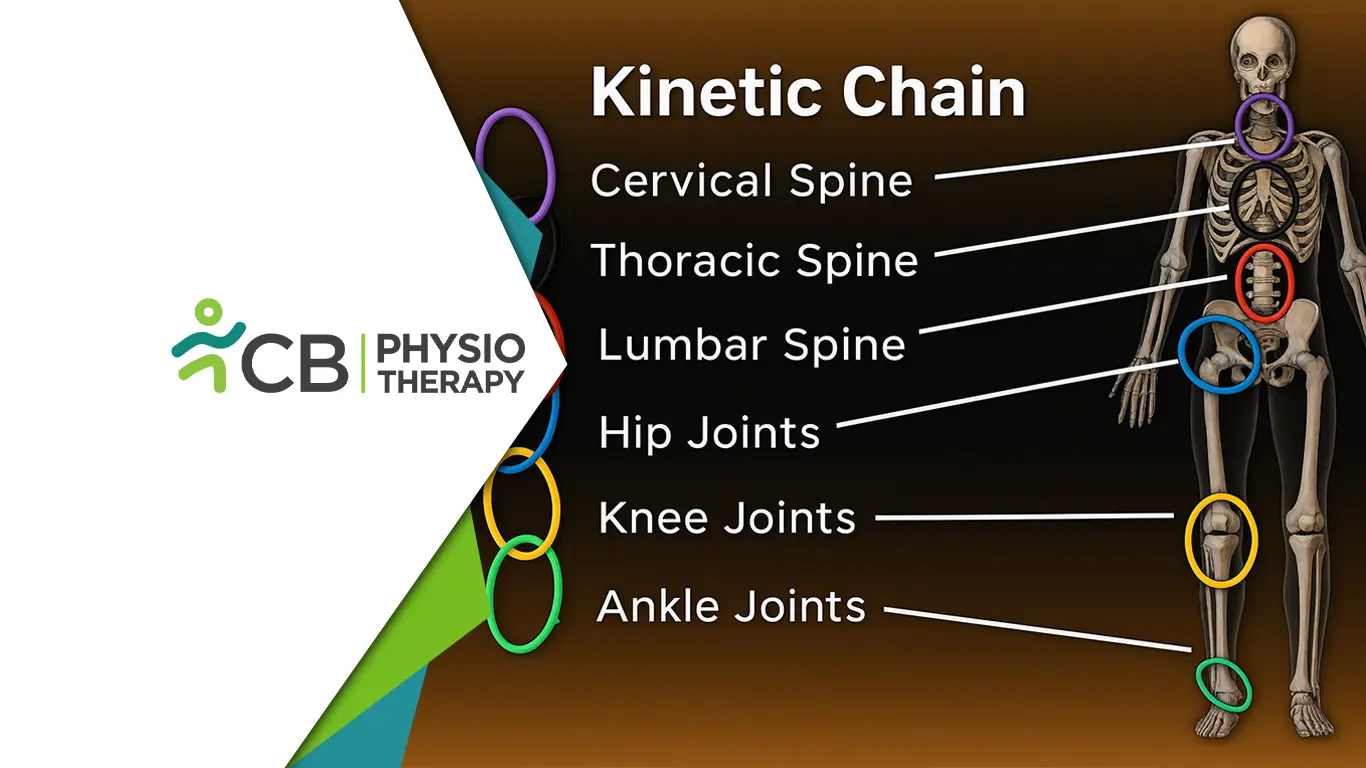
What Are Kinetic Chains?
A kinetic chain is the sequence of joints, muscles,
and fascia that link together during movement. Instead of functioning as
isolated parts, the body moves through coordinated chains.
There are three major kinetic chains:
1. Lower Kinetic Chain
Feet → Ankles → Knees → Hips → Pelvis → Lumbar Spine
Problems here often cause knee pain, hip stiffness,
back pain, and gait issues.
2. Upper Kinetic Chain
Hands → Wrists → Elbows → Shoulders → Cervical Spine
Dysfunction causes neck pain, frozen shoulder, tennis
elbow, and poor posture.
3. Spiral & Lateral Chains
Responsible for rotational stability and coordination,
especially in sports and functional activities.
When one link becomes dysfunctional—weak, tight,
stiff, or unstable—the entire chain compensates, often resulting in pain.
Why Pain Moves Along the Chain?
- If your hip muscles are weak, your knee takes extra stress.
- If your ankle joint is stiff, your spine compensates during walking.
- If your shoulder blade is unstable, your neck muscles overwork.
- Pain radiates or shifts because movement is shared among multiple joints.
- Common Real-Life Examples
1. Flat feet → Knee Pain
Collapsed arches rotate the knee inward, stressing ligaments and cartilage.
2. Rounded shoulders → Neck Pain
Weak scapular stabilizers force the neck muscles to bear excessive load.
3. Tight hip flexors → Low Back Pain
Sitting for long hours shortens the hips, tilting the pelvis forward and straining the spine.
Physiotherapists at CB Physiotherapy often treat such
cases by focusing not only on the painful joint but also on the root cause in
another part of the chain.
How Physiotherapists Assess the Kinetic Chain?
A proper assessment is crucial before designing any treatment plan. At CB Physiotherapy and similar evidence-based clinics, evaluation includes:
1. Posture analysis
2. Gait and movement observation
3. Joint range-of-motion testing
4. Muscle strength assessment
5. Flexibility and balance tests
6. Functional movement screening
7. Palpation for fascial restrictions
This whole-body assessment helps identify the exact breakdown in the chain, ensuring treatment focuses on correction—not just symptom relief.
Treatment Approach: Restoring the Complete Chain
Effective rehabilitation focuses on fixing the entire
kinetic chain.
Mobility Correction
Improving flexibility in stiff areas like ankles,
hips, or thoracic spine.
Strengthening Weak Links
Often includes:
- Glute muscles
- Core muscles
- Scapular stabilizers
- Foot intrinsic muscles
Posture and Gait Retraining
Small corrections dramatically reduce stress on
joints.
Functional Movement Training
Re-teaching proper bending, squatting, lifting, and
walking patterns.
Neuromuscular Re-education
Improves coordination between joints so the chain
moves smoothly.
Advanced Techniques (as per need)
- Myofascial release
- IASTM
- Dry needling
- Cupping
- Electrotherapy
- Kinesio taping
- CB Physiotherapy follows an integrated model using these techniques to restore the balance of the entire chain.
Who Benefits Most from Kinetic Chain–Based
Physiotherapy?
This approach is ideal for:
1. Athletes
2. Runners
3. Post-surgical orthopedic patients
4. Office workers who sit for long hours
5. Elderly individuals with instability
6. Children with developmental patterns
7. People with chronic or recurring pain
8. Anyone whose pain returns repeatedly benefits from this deeper method of evaluation.
Why This Approach Prevents Recurrence of Pain?
Conventional treatment often focuses on the painful joint only. Kinetic chain–based assessment corrects:
1. Muscle imbalance
2. Joint alignment
3. Coordination and stability
4. Faulty movement patterns
This is why recovery is faster and more sustainable. Clinics like CB Physiotherapy prioritise kinetic chain evaluation because it ensures long-term and meaningful improvement rather than short-term symptom relief.
Treat the Chain, Not Just the Pain
Your body is a connected system—not individual parts working alone. Understanding kinetic chains helps physiotherapists diagnose the actual source of pain, not just the surface problem.
Whether it’s knee pain from weak hips, neck pain from
shoulder instability, or back pain from tight ankles—the solution lies in
restoring the balance of the entire chain.
At CB Physiotherapy, the focus on detailed assessment
and chain-based treatment enables patients to achieve true, lasting recovery
and return to functional, pain-free living.