

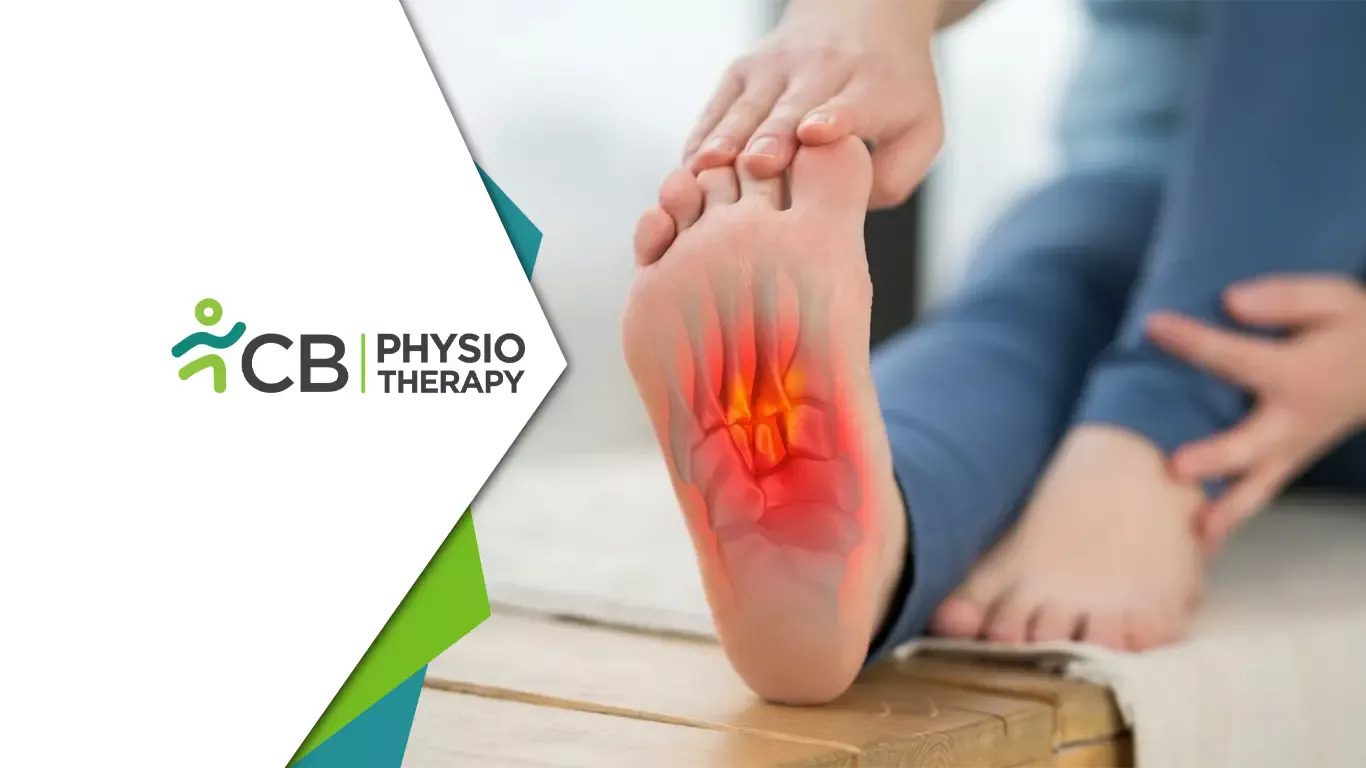
Walking is one of the simplest and most effective ways to stay active. But if your feet start hurting after a walk, even a short one, it can make everyday activities uncomfortable and frustrating.
Occasional foot discomfort after unusually
long or intense activity may settle with rest. However, recurring pain after
walking can sometimes indicate an underlying problem involving the muscles,
tendons, joints, nerves, footwear, or the way your feet move.
So, why do your feet hurt after walking?
Let's explore 7 common causes of foot pain
after walking and understand how physiotherapy can help you walk more
comfortably.
Plantar fasciitis is one of the common causes
of pain around the heel and bottom of the foot.
The plantar fascia is a strong band of tissue
that runs along the sole of your foot. Repeated stress on this tissue can cause
irritation and pain.
·
Pain around the
heel or arch
·
Discomfort after
prolonged walking or standing
·
Tightness in the
sole of the foot
·
Pain that may be
worse during the first few steps after rest
Physiotherapy can help by improving the
flexibility and strength of the calf, ankle, and foot muscles while addressing
factors that may be increasing stress on the plantar fascia.
2. Flat Feet or Poor Foot Mechanics
Your feet absorb and distribute forces every
time you take a step. If your foot posture or movement pattern is altered,
certain tissues may have to work harder than they should.
Flat feet, excessive inward rolling of the
foot, or weakness in the muscles supporting the arch can contribute to
discomfort during prolonged walking.
Possible symptoms include:
·
Pain in the arch
·
Foot fatigue
after walking
·
Heel discomfort
·
Ankle or lower-leg
discomfort
A physiotherapist can assess your foot
posture, muscle strength, balance, and walking pattern and develop an exercise
programme to improve foot and lower-limb mechanics.
3. Unsupportive or Poorly Fitting Footwear
Sometimes the problem isn't the amount you
walk—it's what you're walking in.
Shoes that are too tight, lack adequate
cushioning, provide insufficient support, or do not suit your foot shape can
increase pressure on different parts of the foot.
This may contribute to problems such as:
·
Blisters
·
Pain in the ball
of the foot
·
Heel discomfort
·
Toe pain
·
Pressure around
the arch
4. Achilles Tendon Problems
The Achilles tendon connects the calf muscles
to the heel bone and plays an important role during walking.
Increasing your walking distance suddenly,
spending more time on your feet, or repeatedly loading the tendon can irritate.
You may experience:
·
Pain at the back
of the heel
·
Stiffness around
the Achilles tendon
·
Discomfort that
increases with activity
·
Tenderness around
the tendon
Physiotherapy may include progressive
strengthening, flexibility exercises, movement assessment, and gradual activity
modification to help restore the tendon's ability to tolerate load.
5. Weak Foot and Ankle Muscles
Walking requires coordinated activity from numerous
small muscles in your feet and larger muscles throughout your legs.
If these muscles are weak or poorly
coordinated, your feet may become tired more quickly during longer walks.
You may notice:
·
Foot fatigue
·
Reduced walking
endurance
·
Difficulty maintaining
balance
·
Recurrent ankle
discomfort
·
Pain after
prolonged activity
A physiotherapist can prescribe targeted
strengthening exercises for the foot, ankle, calf, and surrounding muscles.
6. Nerve-Related Foot Pain
Not all foot pain comes from muscles and joints.
Irritated or compressed nerves can cause
symptoms such as:
·
Burning
·
Tingling
·
Numbness
·
Pins and needles
·
Sharp or shooting
pain
These symptoms may become more noticeable
after standing or walking for extended periods.
The underlying cause needs to be identified
before treatment. Physiotherapy may form part of management when nerve
irritation or movement-related factors are contributing to symptoms.
Persistent burning, numbness, or tingling
should not simply be ignored.
7. Increasing Your Walking Too Quickly
Have you recently started walking more?
Perhaps you've begun a daily walking routine,
increased your step count, started walking for weight management, or returned
to exercise after a long break.
A sudden increase in activity can place more
stress on tissues than they are currently prepared to handle.
This can result in pain involving the:
·
Feet
·
Ankles
·
Calf muscles
·
Knees
The solution isn't necessarily to stop walking
completely. Instead, your activity may need to be increased gradually while
your strength and tolerance improve.
How Can Physiotherapy Help Foot Pain After
Walking?
Physiotherapy focuses on identifying why your
feet hurt, rather than simply treating the painful area.
During an assessment, a physiotherapist may
evaluate:
·
Foot and ankle
mobility
·
Muscle strength
·
Flexibility
·
Balance
·
Foot posture
·
Walking pattern
·
Joint movement
·
Previous injuries
·
Activity levels
·
Footwear
Depending on the findings, treatment may
include:
·
Stretching and
Strengthening Exercises
Specific exercises can improve the
strength and flexibility of the foot, ankle, calf, and lower-limb muscles.
Hands-on techniques may be used when
appropriate to improve mobility and reduce stiffness in relevant joints and
soft tissues.
·
Gait Assessment
Your walking pattern can provide
important clues about why certain areas are being overloaded.
·
Correcting
contributing movement patterns may help reduce unnecessary stress on the feet.
Footwear and Activity Advice
A physiotherapist can help you understand
whether your footwear, walking habits, or sudden changes in activity may be
contributing to your symptoms.
Progressive Rehabilitation
Rather than returning to long walks
immediately after pain improves, rehabilitation can gradually increase your
capacity to tolerate walking and other activities.
Foot pain after walking shouldn't
automatically be dismissed as simple tiredness. Your feet, ankles, and lower
limbs work together to absorb load and keep you moving. If pain repeatedly
occurs after walking, identifying the underlying cause is the key to effective
management.
Walk more comfortably. Move with confidence.
And don't let recurring foot pain become your new normal.