

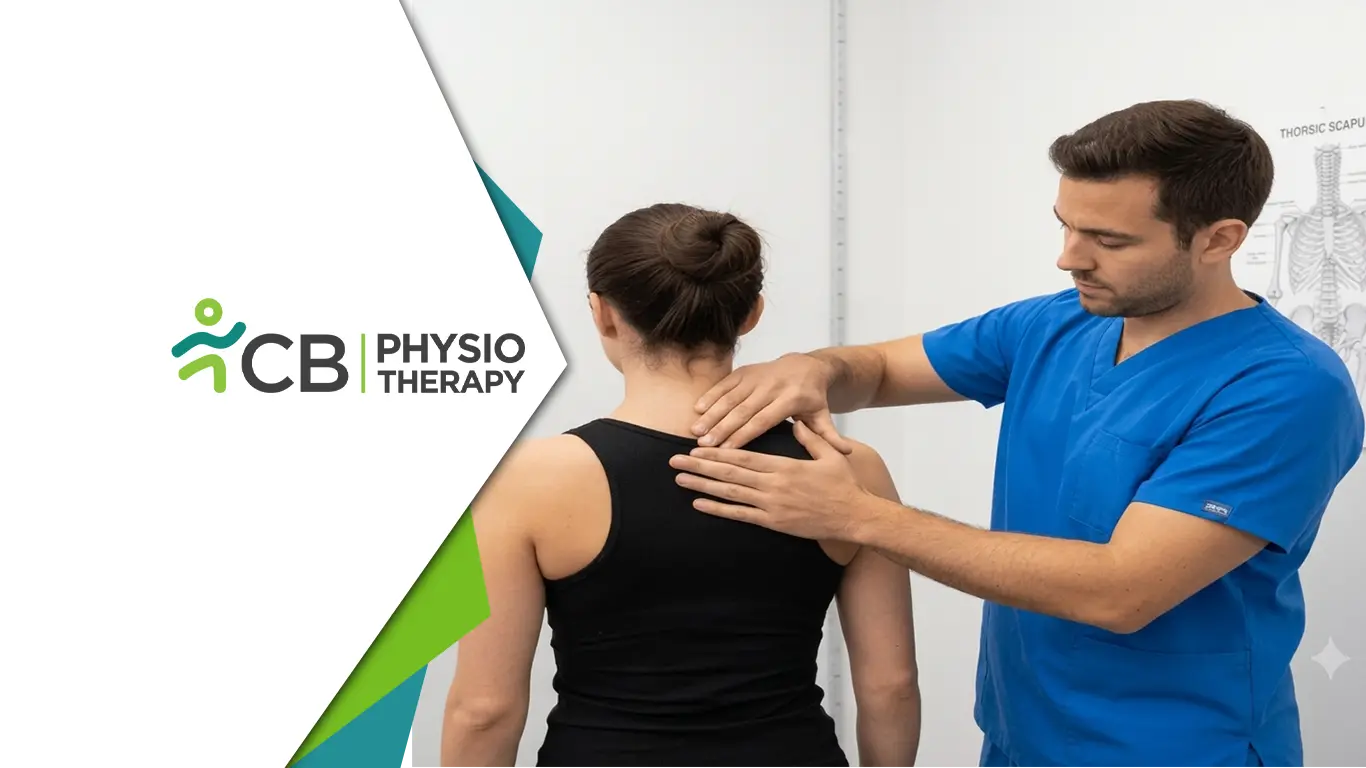
The thoracic spine, commonly known as the mid-back, helps maintain posture, supports upper-body movement, and allows the rib cage to move efficiently during breathing. It consists of 12 vertebrae (T1–T12), connecting the cervical spine (neck) to the lumbar spine (lower back).
Although thoracic mobility is essential for
everyday activities, people often overlook it until stiffness, discomfort, or
restricted movement starts affecting daily life. Prolonged sitting, poor
movement habits, sedentary lifestyles, and inadequate physical activity can
gradually contribute to reduced thoracic mobility.
But what happens when your mid-back loses
its natural flexibility? Can it affect your neck, shoulders, and even
breathing? Let's understand the causes, symptoms, and role of physiotherapy in
improving thoracic mobility.
What Is Restricted
Thoracic Mobility?
Thoracic
mobility refers to the ability of the mid-back to move freely in different
directions, including:
·
Flexion: Bending the upper back forward.
·
Extension: Arching the upper back backwards.
·
Rotation: Turning the trunk from side to side.
·
Lateral flexion: Bending the trunk sideways.
Restricted
thoracic mobility occurs when these movements become limited due to joint
stiffness, muscular tightness, postural adaptations, or other musculoskeletal
conditions.
When the thoracic spine cannot move
efficiently, other regions of the body may compensate, potentially increasing
mechanical stress on the neck, shoulders, and lower back.
Common
Causes of Restricted Thoracic Mobility
Several
factors can contribute to reduced movement in the thoracic spine:
1.
Prolonged Sitting and Sedentary Lifestyle
Spending long hours sitting
at a desk, working on computers, or using mobile phones can encourage sustained
rounded upper-back postures. Limited movement throughout the day may contribute
to stiffness and reduced spinal mobility.
2. Poor Postural Habits
Forward head posture, rounded
shoulders, and excessive upper-back rounding can influence thoracic movement
patterns. Maintaining these positions for prolonged periods may make
comfortable extension and rotation more difficult.
3. Muscle Tightness
Tightness in the pectoral
muscles, intercostal muscles, and surrounding spinal muscles may contribute to
restricted movement of the upper body and rib cage.
4. Age-Related Changes
With ageing, changes in
spinal joints, intervertebral discs, and surrounding tissues may reduce
flexibility. Conditions such as thoracic spondylosis can also contribute to
stiffness.
5. Previous Injuries and
Medical Conditions
Previous spinal injuries, rib
injuries, vertebral fractures, and certain inflammatory or degenerative
conditions can affect thoracic mobility.
How Does Restricted
Thoracic Mobility Affect Daily Activities?
Thoracic stiffness does not
always remain limited to the mid-back. Since the thoracic spine works together
with the neck, shoulders, and rib cage, reduced mobility can influence several
everyday movements.
1. Neck Discomfort and
Increased Cervical Strain
When the thoracic spine
becomes stiff, the neck may compensate to achieve movements such as looking
upwards, turning the head, or maintaining a comfortable working posture. This
may contribute to increased muscular demand and neck discomfort.
2. Shoulder Movement
Restrictions
The thoracic spine provides
an important foundation for shoulder blade movement and overhead arm
activities. Reduced thoracic extension and rotation may alter scapular movement
and make reaching overhead, lifting objects, or performing exercises more
challenging.
3. Difficulty With
Twisting and Reaching
Activities such as reversing
a car, reaching behind your body, turning while walking, or picking up objects
from the side require adequate trunk rotation. Restricted thoracic mobility can
make these movements uncomfortable or less efficient.
4. Changes in Breathing
Mechanics
The thoracic spine and rib
cage work together during breathing. The ribs expand and move to accommodate
changes in chest volume during inhalation. Reduced rib cage mobility may limit
comfortable chest expansion, particularly during deep breathing or physical
activity.
However, breathing difficulties should
never automatically be attributed to thoracic stiffness, as respiratory and
cardiovascular conditions may also cause similar symptoms.
5. Reduced Exercise
Performance
Activities such as swimming,
tennis, golf, weight training, and yoga require coordinated spinal and shoulder
movements. Limited thoracic mobility may affect movement efficiency and make
certain exercises more difficult.
How Can Physiotherapy Help
Improve Thoracic Mobility?
Physiotherapy plays an
important role in identifying movement restrictions, addressing contributing
factors, and restoring functional mobility through an individualised
rehabilitation programme.
At CB Physiotherapy, treatment begins
with a comprehensive assessment to understand the patient's movement limitations
and their impact on daily activities.
1. Comprehensive
Physiotherapy Assessment
A physiotherapist may assess:
·
Thoracic
flexion, extension, and rotation.
·
Postural
alignment and rounded shoulder positioning.
·
Cervical
and shoulder range of motion.
·
Rib
cage expansion and breathing patterns.
·
Muscle
tightness and flexibility.
Functional movements such as
reaching, twisting, and overhead activities.
This helps identify whether
thoracic stiffness is the primary problem or part of a wider movement
dysfunction.
2. Thoracic Mobility
Exercises
Specific exercises help
improve spinal movement in restricted directions.
Examples include:
·
Thoracic
extension over a foam roller.
·
Open-book
thoracic rotation.
·
Quadruped
thoracic rotation.
·
Cat-cow
mobility exercises.
·
Seated
thoracic extension.
These exercises are selected
according to the patient's mobility restrictions, tolerance, and clinical
condition.
3. Manual Therapy
Techniques
Depending on the assessment
findings, physiotherapists may use appropriate manual therapy techniques,
including thoracic joint mobilisation and soft-tissue techniques, to address
joint stiffness and surrounding muscle tightness.
These techniques are generally combined with
active exercises to improve movement control and functional mobility.
4. Postural Correction and
Ergonomic Advice
Patients who spend extended
hours working at desks may benefit from ergonomic modifications, including
appropriate screen positioning, lumbar and back support, and regular movement
breaks.
Physiotherapists also educate patients about
maintaining comfortable working postures and avoiding prolonged static
positions.
5. Strengthening and
Breathing Exercises
Strengthening the upper-back
muscles, scapular stabilisers, and core muscles can improve postural endurance
and movement control.
Breathing exercises,
including diaphragmatic breathing and controlled rib cage expansion, may also
be incorporated when appropriate to improve breathing coordination.
Can Restricted Thoracic
Mobility Be Prevented?
Although some causes of
thoracic stiffness cannot be completely prevented, maintaining regular movement
and healthy activity habits can help reduce the risk of developing movement
restrictions.
Simple preventive measures
include:
·
Avoid
sitting continuously for prolonged periods.
·
Take
short movement breaks during desk work.
·
Practise
regular upper-back mobility exercises.
·
Maintain
adequate upper-back and core strength.
·
Include
activities such as walking, swimming, or yoga in your routine.
·
Follow
appropriate ergonomic practices at work.
Restricted thoracic mobility
can influence much more than just your mid-back. It may affect neck comfort,
shoulder movement, posture, trunk rotation, and the mechanics of breathing.
Ignoring persistent stiffness can lead to movement compensations that interfere
with everyday activities and exercise performance.
Physiotherapy helps identify the underlying
movement restrictions and addresses them through mobility exercises, manual
therapy, strengthening, breathing techniques, and ergonomic education.
At CB Physiotherapy,
our focus is not just on relieving discomfort but also on improving spinal
mobility, restoring functional movement, and helping individuals maintain an
active, healthy lifestyle.