

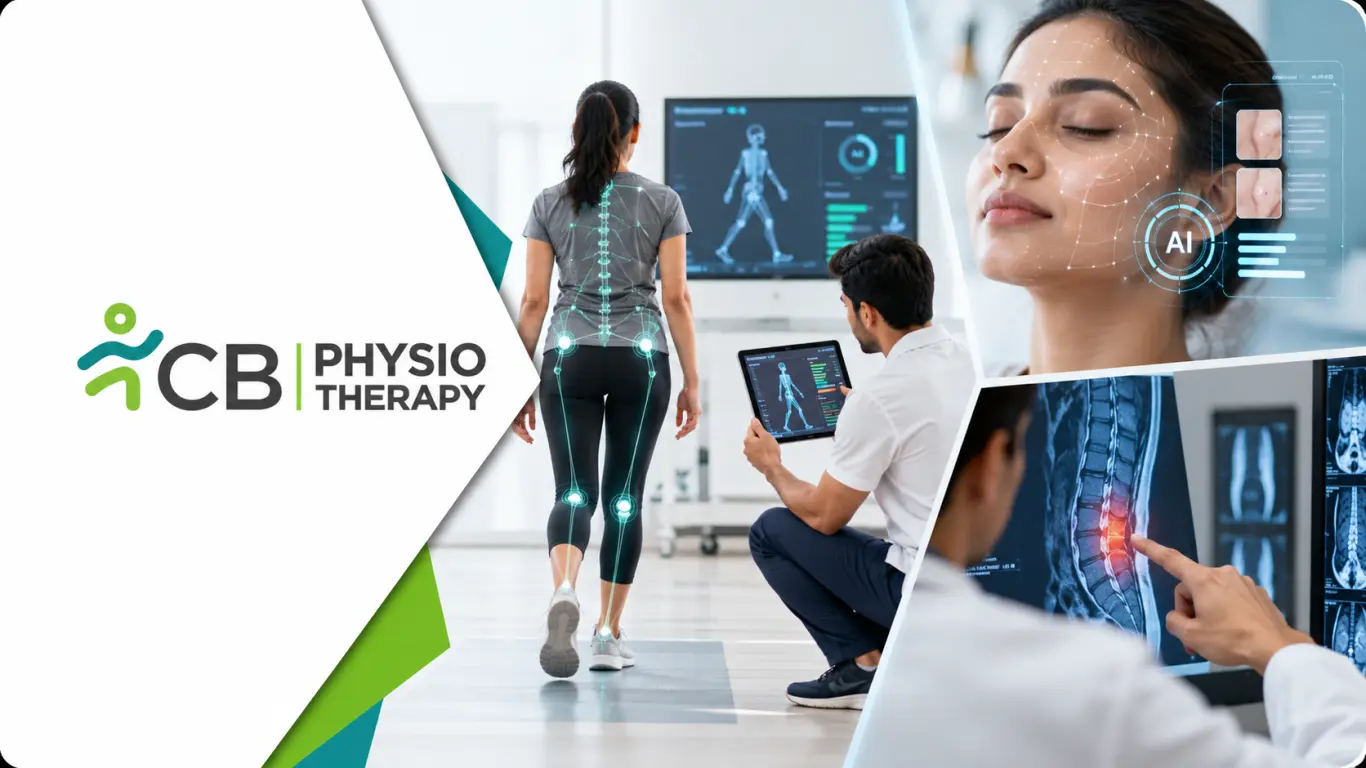
Artificial
intelligence in healthcare is often discussed in futuristic terms: autonomous
hospitals, robotic surgeons and algorithms capable of diagnosing every disease.
However, some of the most meaningful applications of AI are far less dramatic.
They are already being used to make everyday healthcare more structured,
measurable and personalised.
The real
value of AI is not necessarily in replacing a healthcare professional. It lies
in helping professionals assess patients more systematically, identify relevant
patterns, personalise treatment, track progress and maintain continuity between
appointments.
This
practical, human-supervised model can already be seen in fields as varied as
physiotherapy, aesthetic skincare, medical imaging and preventive screening. At
CB Physiotherapy, AI is
being incorporated into the rehabilitation journey while physiotherapists
remain responsible for clinical interpretation, treatment decisions and patient
care.
Why Physiotherapy Is Well Suited to Practical AI
Physiotherapy
is highly individualised. Two people with similar complaints may have very
different causes, functional limitations and recovery requirements.
For
example, two patients may both report lower-back pain. One may have restricted
hip mobility and prolonged sitting habits, while another may have reduced core
control, postural overload or difficulty returning to activity after an injury.
Giving both patients the same standard exercise sheet is unlikely to address
their individual needs.
Physiotherapists
therefore need to evaluate several factors, including:
1. Pain
and symptom behaviour
2. Joint
mobility and range of movement
3. Strength
and functional capacity
4. Posture
and movement patterns
5. Previous
injuries or surgeries
6. Daily
activities and occupational demands
7. Exercise
tolerance
8. Recovery
goals
9. Adherence
to the prescribed programme
AI can help
organise this information and make the rehabilitation process more consistent.
It can support the physiotherapist by converting assessment findings and
follow-up information into a more structured recovery pathway.
How CB Physiotherapy Uses AI in the Rehabilitation Journey
The AI Precision Recovery approach at CB Physiotherapy follows four connected stages: Assess, Plan, Track and Advance. This is important because AI is not being treated as a separate technological attraction. It is incorporated into the patient’s journey from the initial assessment to long-term recovery and relapse prevention.
1. AI-Assisted Assessment
A meaningful physiotherapy plan begins by understanding what may be contributing to the patient’s problem. At CB Physiotherapy, physiotherapists use advanced AI-assisted assessments alongside their clinical examination. The technology helps make the assessment process more systematic, while the physiotherapist considers the patient’s history, symptoms, functional limitations and physical findings.
This
combination of technology and professional judgement can help the
physiotherapist examine questions such as:
- Which
movements are limited or painful?
- Is the
patient compensating through another joint or muscle group?
- Which
activities are most affected?
- Are
there measurable differences between the two sides of the body?
- Which
functional limitations should be prioritised?
- What
factors may increase the risk of recurrence?
The purpose
is not to allow an algorithm to independently diagnose the patient. The purpose
is to give the physiotherapist better-organised information with which to
investigate the problem and plan treatment.
AI-assisted
assessment can also help create a clearer baseline. Instead of relying only on
a general description such as “the patient feels slightly better,” the
rehabilitation team can compare relevant functional measures and
patient-reported progress over time.
2. A Personalised Recovery Map
Once the assessment has been completed, the next step is to translate the findings into realistic recovery goals. CB Physiotherapy structures recovery around SMART goals and defined milestones. Depending on the patient, these goals might include:
- Reducing
pain during a particular movement
- Improving
joint mobility
- Walking
a specified distance more comfortably
- Returning
to work without symptom aggravation
- Regaining
strength after surgery
- Resuming
a sport or exercise routine
- Improving
balance and confidence
- Performing
daily activities independently
This is
where structured assessment becomes practically useful. The treatment plan can
be aligned with the patient’s actual limitations rather than being based only
on the name of a condition.
For
example, two people recovering from knee surgery may be at different stages.
One may need to prioritise swelling control and basic mobility, while another
may be ready for strength progression, balance exercises and preparation for
stairs or outdoor walking. AI-supported
information can help the physiotherapist organise these priorities, but the
recovery roadmap remains professionally supervised and responsive to the
patient’s progress.
Patients
also benefit from knowing what they are working towards. Clearly defined
milestones make rehabilitation easier to understand and can improve motivation
during what may otherwise feel like a slow or uncertain process.
3. Data-Supported Progress Tracking
Physiotherapy outcomes depend on more than selecting the correct treatment on the first day. Recovery needs to be monitored because pain, strength, movement quality and exercise tolerance can change throughout the programme. CB Physiotherapy uses a data-driven system to measure progress at relevant milestones. The physiotherapist can then review whether the patient is improving as expected or whether the treatment plan needs to be adjusted.
Progress
tracking may help answer practical questions such as:
- Has
mobility improved since the initial assessment?
- Can
the patient perform an exercise with better control?
- Is
pain reducing during important daily activities?
- Is the
current exercise intensity still appropriate?
- Has
the patient reached the next recovery milestone?
- Is
progress slowing because of poor adherence, fear of movement or another
barrier?
- Does
the plan need to be progressed, modified or reassessed?
This makes AI and data useful for decision support rather than merely for producing a report. Progress data can also improve communication with the patient. When patients can understand what has changed, they may be more likely to remain engaged with the programme. Even when complete recovery will take time, smaller documented improvements can show that the patient is moving in the right direction.
4. Treatment That Adapts to the Patient
A physiotherapy programme should not remain static throughout recovery. An exercise that is appropriate during the first week may become too easy later. Conversely, an exercise may need to be modified if it repeatedly aggravates symptoms or if the patient cannot perform it safely.
By
combining reassessment findings, progress information and patient feedback, the
physiotherapist can decide when to:
- Increase
or reduce exercise intensity
- Change
the number of repetitions
- Introduce
resistance or balance challenges
- Progress
from basic movement to functional activity
- Add
sport-specific or occupation-specific exercises
- Modify
the programme because of pain or fatigue
- Move
from supervised treatment towards greater independence
AI-supported
systems can help organise this information and flag patterns, but progression
remains a clinical decision. The physiotherapist must still consider healing
timelines, medical history, safety, confidence, technique and the patient’s
broader circumstances.
5. Continuing Care Outside the Clinic
One of the
biggest challenges in physiotherapy is that recovery does not happen only
during the appointment.
A patient
may spend thirty to sixty minutes with a physiotherapist but several days
independently managing exercises, activity modification and recovery. If the
patient forgets the exercise sequence, performs it incorrectly or stops after
symptoms improve slightly, the treatment may not produce its intended benefit. CB
Physiotherapy addresses this gap through guided home programmes, adherence
tracking and professional follow-ups. Its tele-physiotherapy
and digital rehabilitation pathway is supported by tools such as the Activ PT
app.
Patients
can receive:
- Personalised
exercise programmes
- Video
demonstrations
- Exercise
reminders
- Symptom
and progress tracking
- Educational
information
- Communication
with their physiotherapist
- Updates
to the programme as recovery progresses
This does not mean that every physiotherapy condition can be managed remotely. Some patients need hands-on assessment, manual therapy, supervised movement training or access to clinic-based equipment. However, digital support can improve continuity between sessions. It can also be useful for patients receiving home physiotherapy, people with limited access to clinics, individuals managing chronic musculoskeletal problems and patients completing structured post-operative exercises. The technology supports the relationship with the physiotherapist rather than attempting to replace it.
6. Supporting Adherence and Preventing
Recurrence
A
technically correct treatment plan will have limited value if the patient
cannot follow it consistently.
Adherence
can be affected by several factors:
- Forgetting
the prescribed exercises
- Uncertainty
about technique
- Pain
or fear during movement
- Lack
of visible progress
- Difficulty
fitting rehabilitation into a routine
- Stopping
exercises once immediate pain reduces
- Losing
contact with the therapist after treatment
Digital exercise guidance, reminders and progress tracking can reduce some of these barriers. The physiotherapist can also use follow-up information to understand why the patient may not be progressing as expected. This is particularly relevant for people undergoing longer rehabilitation programmes or receiving treatment for the many conditions managed through physiotherapy. CB Physiotherapy’s model therefore extends beyond short-term pain relief. The Advance stage focuses on helping patients maintain progress, regain independence and reduce the possibility of the same problem returning.
The Human Physiotherapist Remains Central
The
strongest model for AI in rehabilitation is a collaborative one.
An AI
system cannot fully understand every aspect of pain, fear, motivation, family
support, work pressure or the patient’s personal recovery goals. It cannot
replace hands-on examination, therapeutic communication or the clinical
judgement required when symptoms change unexpectedly.
The
physiotherapist remains responsible for:
- Interpreting
assessment findings
- Identifying
warning signs
- Deciding
whether medical referral is required
- Selecting
appropriate treatment techniques
- Teaching
exercises safely
- Monitoring
the patient’s response
- Adjusting
the rehabilitation programme
- Providing
reassurance, education and motivation
AI can
provide structure, pattern recognition and continuity. The physiotherapist
provides context, judgement, accountability and human care.
That
distinction is essential to the responsible use of AI in healthcare.
AI Aesthetics: Applying a Similar Principle to Personalised Skincare
Another
practical application of human-supervised AI can be seen at AI Aesthetics by
Dr. Aakriti Mehra, an aesthetic skin and wellness clinic in Jaipur.
Aesthetic
skincare has traditionally relied heavily on visible examination and standard
treatment menus. A client may request a facial for “glow,” for example, even
though the dull appearance could be associated with dehydration, tanning,
surface congestion, pigmentation, texture changes or skin sensitivity.
AI
Aesthetics uses multi-light skin imaging and AI-supported mapping to assess
visible parameters such as hydration, pigmentation, pores, texture and redness.
These findings are interpreted together with the client’s clinical history,
recent skincare, previous procedures, sun exposure, sensitivity and treatment
objectives.
The AI does
not independently decide the treatment. It helps the clinical team organise the
visible findings before a personalised treatment pathway is selected.
This may
influence whether a client would benefit from a standard hydrafacial
in Jaipur, a more customised facial sequence, a peel,
pigmentation-focused care or a staged treatment plan.
The same
assessment-led principle is relevant when planning laser
hair removal in Jaipur. Factors such as skin type, hair
characteristics, treatment area, recent sun exposure and sensitivity still
require professional consideration. Technology can support consistency, but
suitability and treatment parameters should remain clinically supervised.
For clients
considering skin tightening, assessment also helps separate concerns such as
skin laxity, facial volume changes, surface texture and jawline definition
before recommending options such as HIFU
treatment in Jaipur.
Follow-up
imaging and structured reports can then help document how the skin has changed
over time.
The
similarity between CB Physiotherapy and AI Aesthetics lies in the workflow:
- Begin
with structured assessment rather than assumption.
- Use AI
to organise or interpret relevant data.
- Allow
a qualified professional to review the findings.
- Personalise
the treatment to the individual.
- Reassess
outcomes and modify the plan when necessary.
However,
the clinical applications are different. CB Physiotherapy applies this model to
pain, movement, function and rehabilitation. AI Aesthetics applies it to skin
imaging, aesthetic concerns and treatment selection.
Other Practical Uses of AI in Healthcare
AI is also
being used in areas where the main requirement is rapid screening or
interpretation of medical data.
AI-Assisted Medical Imaging
Qure.ai
develops systems that help analyse medical images such as chest X-rays and head
CT scans. These tools can highlight findings associated with conditions
including tuberculosis, lung abnormalities, brain haemorrhage and stroke.
In this
setting, AI is primarily helping clinicians review a large volume of imaging
information, identify potentially urgent scans and support faster reporting.
This
differs from CB Physiotherapy and AI Aesthetics because the AI is mainly being
used for image interpretation and clinical triage rather than for managing an
ongoing, personalised treatment journey.
AI-Based Breast Screening
NIRAMAI
uses artificial intelligence with thermal imaging to support breast abnormality
screening. The system analyses heat patterns captured through a non-contact,
radiation-free process.
This
represents another important AI model: making preventive screening more
portable and potentially more accessible.
Again, its
role is different from the service-delivery models used by CB Physiotherapy and
AI Aesthetics. NIRAMAI focuses primarily on screening and risk identification,
after which appropriate medical evaluation is required.
What the Most Useful Healthcare AI Systems Have in Common
Despite
working in different specialties, effective healthcare AI applications tend to
follow several common principles.
They solve
a clearly defined clinical problem. They help professionals process information
more consistently. They produce outputs that can be reviewed rather than
blindly accepted. They fit into an existing care pathway. Most importantly,
they preserve human oversight when decisions affect diagnosis, treatment or
patient safety.
The future
of healthcare may not be defined by patients choosing between an AI system and
a healthcare professional. It is more likely to be defined by professionals who
know how to use AI responsibly and those who continue to work without the
additional information it can provide.
CB
Physiotherapy demonstrates how this can work in rehabilitation: AI-assisted
assessment, personalised goals, measurable progress and continued support, all
interpreted and delivered by trained physiotherapists.
AI
Aesthetics applies a comparable philosophy to skincare by combining imaging and
AI-supported analysis with medically reviewed treatment planning. Qure.ai and
NIRAMAI show how the same technology can serve different purposes in imaging
and preventive screening.
These
applications are different, but the underlying lesson is the same. AI creates
the greatest value in healthcare when it makes professional care more informed,
personalised and measurable—without removing the healthcare professional from
the centre of the patient’s journey.