

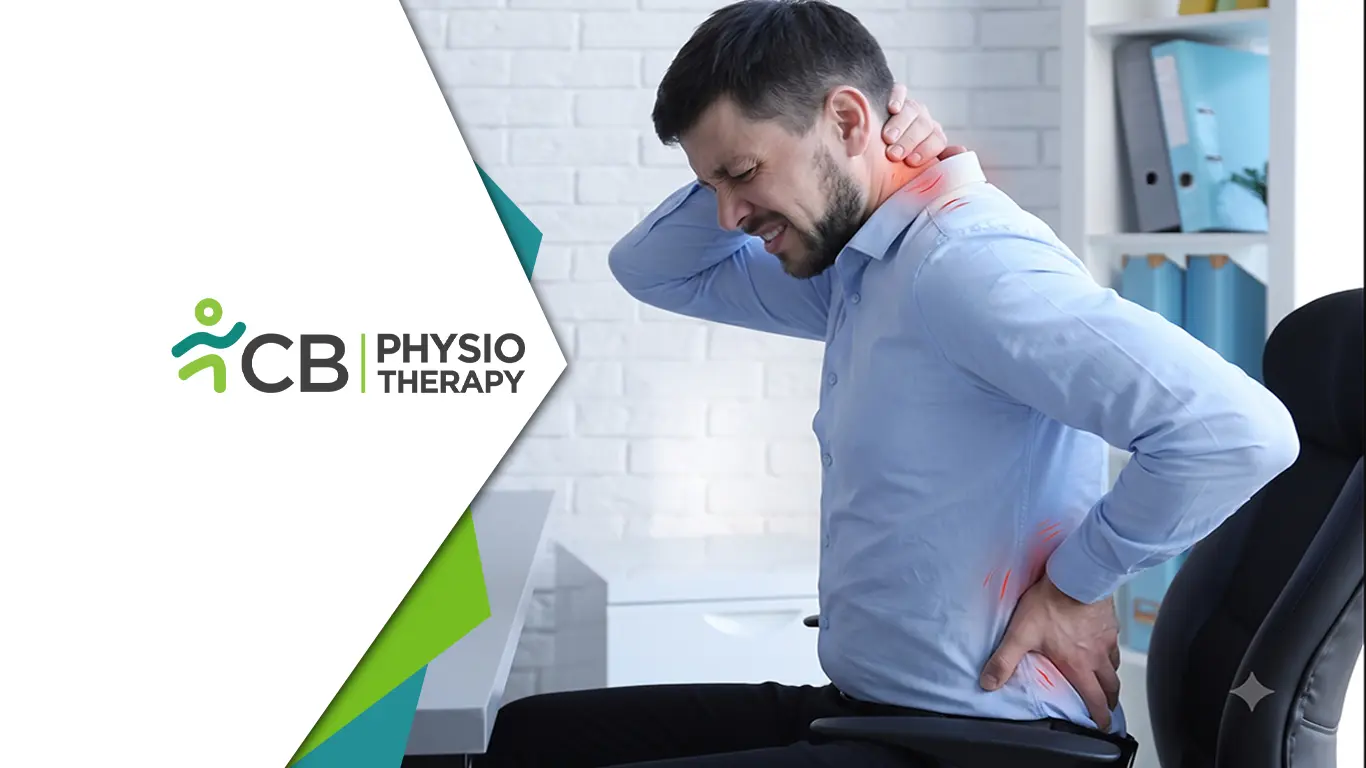
Have you ever stood up after sitting at your desk, in your car, or on the sofa for a long time and felt stiff, tight, or uncomfortable? You are not alone. Many people experience stiffness after prolonged sitting, especially those who spend several hours working at a desk or using screens.
While occasional stiffness is usually nothing
to worry about, frequent stiffness may indicate that your body needs more
movement, better mobility, or professional attention. Understanding why sitting
makes you stiff can help you take simple steps to protect your muscles and
joints—and physiotherapy can play an important role when stiffness starts
affecting your daily life.
Why Does Sitting for Too Long Cause Stiffness?
Your body is designed to move. When you remain
in one position for an extended period, your muscles and joints have less
opportunity to move through their normal range of motion.
Long periods of sitting can contribute to:
·
Reduced joint
movement
·
Muscle tightness
·
Poor posture
·
Reduced blood
circulation
·
Increased stress
on certain muscles and joints
·
Weakness in
muscles that are not being regularly activated
For example, sitting for hours with your hips
and knees bent can make the surrounding muscles and joints feel tight when you
eventually stand. Similarly, leaning toward a computer screen may place
additional strain on the neck, shoulders, and upper back.
The problem is not necessarily sitting itself.
The bigger issue is staying in the same position for too long without enough
movement.
Where Does Sitting-Related Stiffness Usually
Occur?
Stiffness can affect different parts of the
body depending on your sitting position, activity level, and work environment.
1. Lower Back
Lower-back stiffness is particularly common
among people who sit for long periods. Maintaining a seated posture for hours
can place continuous demands on the muscles and structures around the spine.
Looking down at a laptop or phone or reaching
forward toward a keyboard can contribute to tension around the neck and
shoulders. You may notice stiffness when turning your head or getting up after
working.
3. Hips
Your hips remain in a flexed position while
sitting. Over time, limited movement can make the hips feel tight, particularly
when you stand, walk, or exercise after prolonged sitting.
4. Knees and Legs
Keeping your knees bent for long periods may
cause temporary stiffness when you first stand. This often improves once you
begin moving.
Is Stiffness After Sitting Normal?
Occasional stiffness that improves after you
stand up, stretch, or walk around is often related to prolonged inactivity.
However, you should pay attention when
stiffness becomes frequent, severe, or persistent.
Consider consulting a physiotherapist if you
experience:
·
Stiffness that
regularly interferes with work or daily activities
·
Pain along with
stiffness
·
Reduced range of
movement
·
Recurrent muscle
tightness
·
Difficulty
standing or walking after sitting
·
Symptoms that
continue despite regular movement and stretching
·
Weakness,
numbness, or other unusual symptoms
These symptoms don't necessarily mean you have
a serious problem, but an assessment can help identify what may be contributing
to them.
How Can Physiotherapy Help?
Physiotherapy is not simply about treating
pain. A physiotherapist can assess how your joints, muscles, posture, movement
patterns, strength, and flexibility may be contributing to stiffness.
Your treatment may include a combination of
approaches based on your individual needs.
1. Movement and Mobility Exercises
Specific mobility exercises can help improve
movement around stiff joints. Your physiotherapist can recommend exercises
appropriate for your condition rather than relying on generic stretches.
2. Strengthening Exercises
Weak muscles may place additional demands on
other parts of the body. A personalised strengthening programme can help
improve support, stability, and movement efficiency.
3. Posture and Ergonomic Guidance
Your sitting setup can influence how much
strain your body experiences throughout the day. A physiotherapist can guide
you on workstation positioning, chair height, screen placement, and practical
ways to improve your posture.
Depending on your symptoms and assessment, hands-on
techniques may be used to help improve joint or soft-tissue mobility and reduce
discomfort.
5. Education and Movement Strategies
One of the most valuable parts of
physiotherapy is learning how to manage your body outside the clinic. You may
be advised to take regular movement breaks, change positions frequently, and
incorporate simple exercises into your daily routine.
Simple Ways to Reduce Stiffness While Sitting
You don't have to wait until stiffness becomes
painful before making changes.
Try to:
·
Avoid staying in
one position for hours at a time.
·
Stand up and move
around regularly.
·
Change your
sitting position throughout the day.
·
Perform gentle
stretches during breaks.
·
Adjust your
workstation to support a comfortable posture.
Include regular walking and physical activity
in your routine.
Follow a strengthening and mobility programme
if recommended by a professional.
Even small movement breaks can make a
difference when incorporated consistently into your day.
Don't Ignore Persistent Stiffness
Feeling stiff after sitting for a long time is
common, but regularly experiencing stiffness should not simply be accepted as
an unavoidable part of working at a desk or having a sedentary lifestyle.
Your symptoms may be your body's way of
telling you that it needs more movement, better strength, improved mobility, or
a change in your daily habits.
If stiffness is persistent, worsening, or
affecting your quality of life, a physiotherapy assessment can help determine
the underlying factors and create a personalised plan to improve your movement.
At CB Physiotherapy, physiotherapy can help
you understand the cause of your stiffness and work towards better mobility,
strength, and comfortable movement. Don't let prolonged sitting keep your body
feeling restricted—small changes and the right professional guidance can help
you move more freely.